c. 5,500–814 BCE
The Neolithic & the Ancient Berbers
Herders, potters and tomb builders: the ancient Berbers (Amazigh), and the first Phoenician harbours.
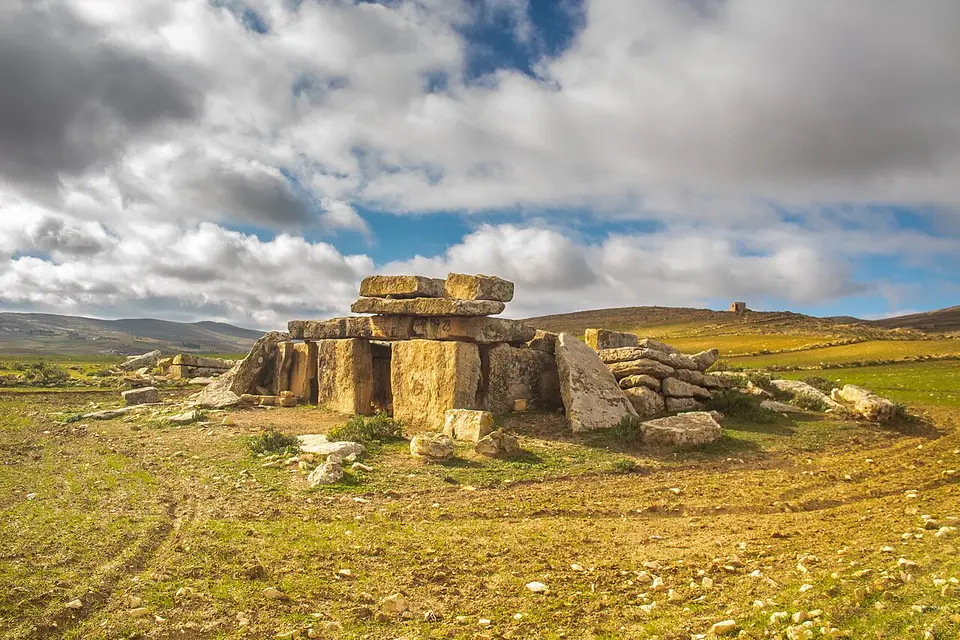
From the 6th millennium BCE herding and pottery spread across Tunisia in two traditions: a Mediterranean Neolithic on the coast and in the Tell, with polished axes, bone tools and decorated pottery, and inland the Neolithic of Capsian tradition, from Redeyef to Zarzis, with arrowheads, grindstones and pots in place of ostrich‑eggshell vessels. Ancient DNA shows that these people descended largely from the local foragers, with smaller contributions from European and Levantine farmers.
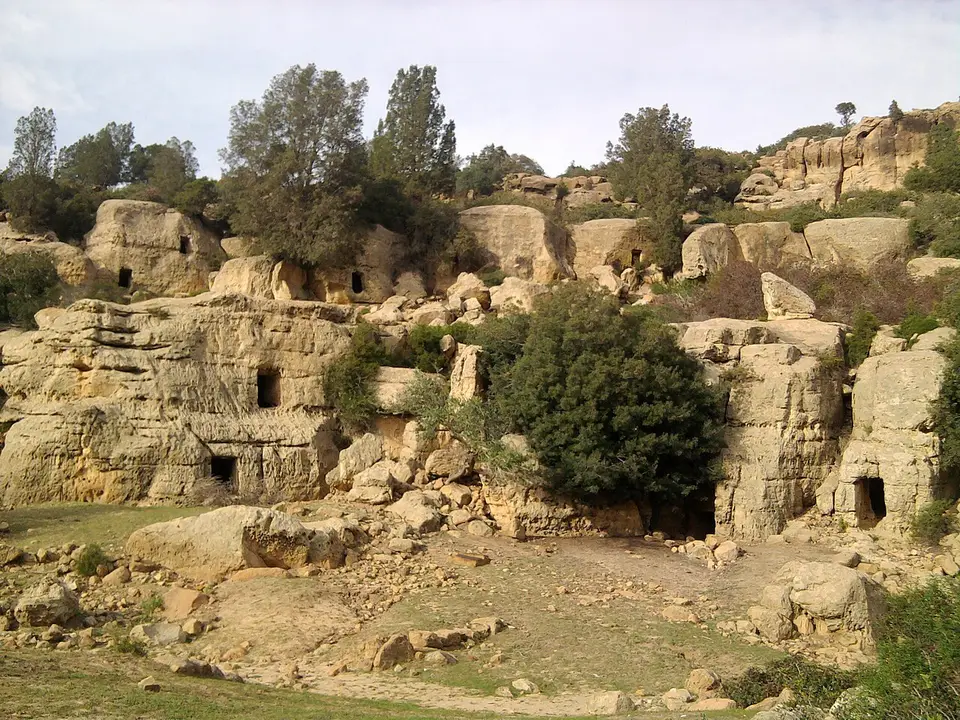
Later prehistory is known here mostly from tombs and rock paintings: dolmens of great stone slabs, as in the necropolis of Ellès near Makthar, whose dating is debated, and the haouanet, burial chambers cut into the rock of Cap Bon and the north, mostly of Numidian times and still used under Rome. Their builders were the ancient Berbers (Amazigh); in the first millennium BCE they wrote their language in the Libyco‑Berber alphabet, the forerunner of today’s Tifinagh.
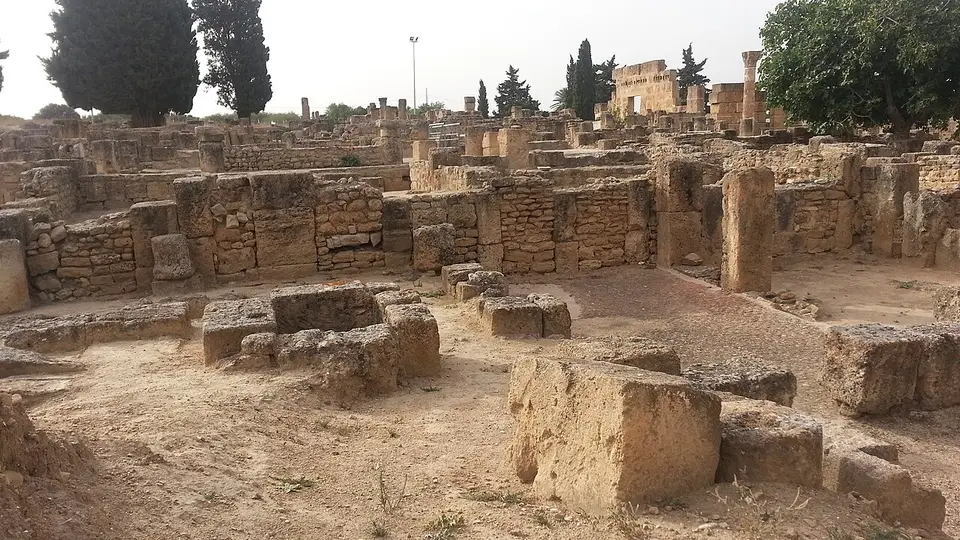
Before Carthage, Phoenician sailors from Tyre had harbours on this coast. Utica, at the mouth of the Medjerda, is traditionally their first colony in North Africa: Pliny the Elder dates it to 1101 BCE, though its oldest excavated remains are later. Carthage followed, by tradition in 814 BCE.
Key dates
- c. 5,500 BCE
- Herding and pottery spread: a Mediterranean Neolithic on the coast, the Neolithic of Capsian tradition inland.
- c. 5,000 BCE
- European and then Levantine farmers add their ancestry to the local forager majority.
- 2nd–1st millennium BCE
- Dolmens such as those of Ellès (dating debated), rock-cut haouanet and rock paintings.
- 1101 BCE
- Founding of Utica, the first Phoenician colony in North Africa, by Pliny’s date.
- 1st millennium BCE
- The ancient Berbers write their language in the Libyco-Berber alphabet.
Key figures
- Ellès · dolmen necropolis
- Haouanet · rock‑cut tombs
- Utica · first Phoenician colony, by tradition
From this era
Who are the Berbers?
The Berbers, who call themselves Amazigh (plural Imazighen), are the indigenous peoples of North Africa, from the Atlantic to western Egypt. Their languages are still spoken in Tunisia, in villages of the south such as Chenini, Douiret and Tamezret, and on Djerba.
The Libyco-Berber alphabet
In the first millennium BCE the ancient Berbers wrote their language in an alphabet of their own, found on stelae across the Maghreb; the Tifinagh of today descends from it.
What remains to see
- Megaliths of Ellès, near Makthar
- Haouanet of Sidi Mohamed Latrech, near Bir Bouregba
- Archaeological site of Utica, near Bizerte