1956–2010
Independence & the Republic
A modern nation: independence, reform, and a long presidency.
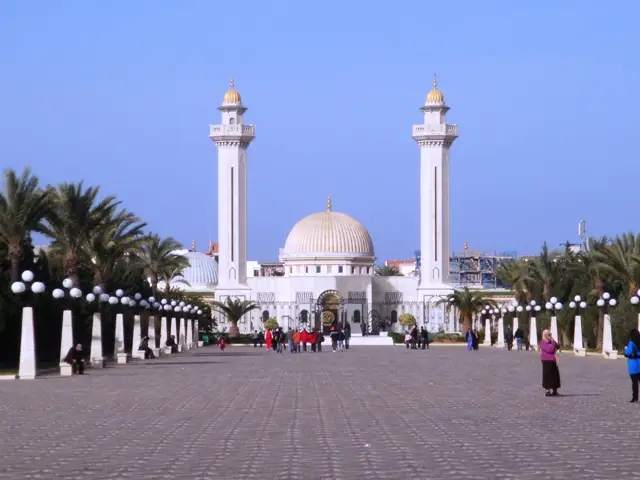
Tunisia won independence on 20 March 1956. That August the Code of Personal Status abolished polygamy and gave women new rights in marriage and divorce. On 25 July 1957 the monarchy was abolished and Habib Bourguiba became the first president of the Republic.
Bourguiba built schools and a modern state, and won back the French base of Bizerte after a bloody crisis in 1961 (the last troops left in 1963), but ruled as president for life.
On 7 November 1987 Zine El Abidine Ben Ali, his prime minister, deposed him in a coup; his 23‑year rule ended with the revolution of 2011.
Key dates
- 20 Mar 1956
- Tunisia wins full independence from France.
- 13 Aug 1956
- The Code of Personal Status grants women landmark rights.
- 25 Jul 1957
- The monarchy is abolished; Bourguiba becomes first president of the Republic.
- 1961–63
- The Bizerte crisis; the last French troops leave in 1963.
- 7 Nov 1987
- Ben Ali deposes Bourguiba in a coup and takes power.
- 2008
- The Gafsa mining-basin protests foreshadow wider unrest.
Key figures
- 20 Mar 1956 · Independence
- Bourguiba · 1st president
- 1956 · Code of Personal Status
“France solemnly recognizes the independence of Tunisia.”Franco-Tunisian Protocol, signed by Christian Pineau and Tahar Ben Ammar, Paris, 20 March 1956
From this era
Habib Bourguiba
Leader of the independence movement and first president of the Republic (1957 to 1987), Bourguiba drove a sweeping programme of modernisation.
Personal Status Code
The 1956 Code of Personal Status abolished polygamy, required consent to marriage and allowed either spouse to seek divorce in court, rights then rare in the Arab world.
The Republic
In 1957 the monarchy of the beys was abolished and Tunisia became a republic.
The Tunisian flag
Independent Tunisia kept the red flag with crescent and star inherited from the Husainid beylik.
What remains to see
- Bourguiba Mausoleum, Monastir