2010–2015
The Jasmine Revolution & the Transition
The spark of the Arab Spring, and the 2014 constitution.
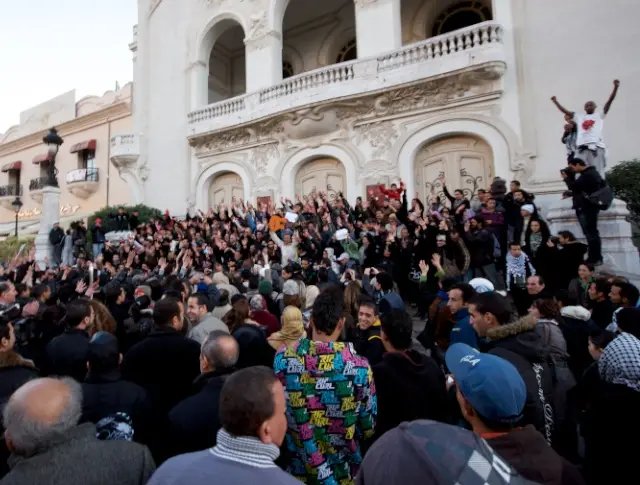
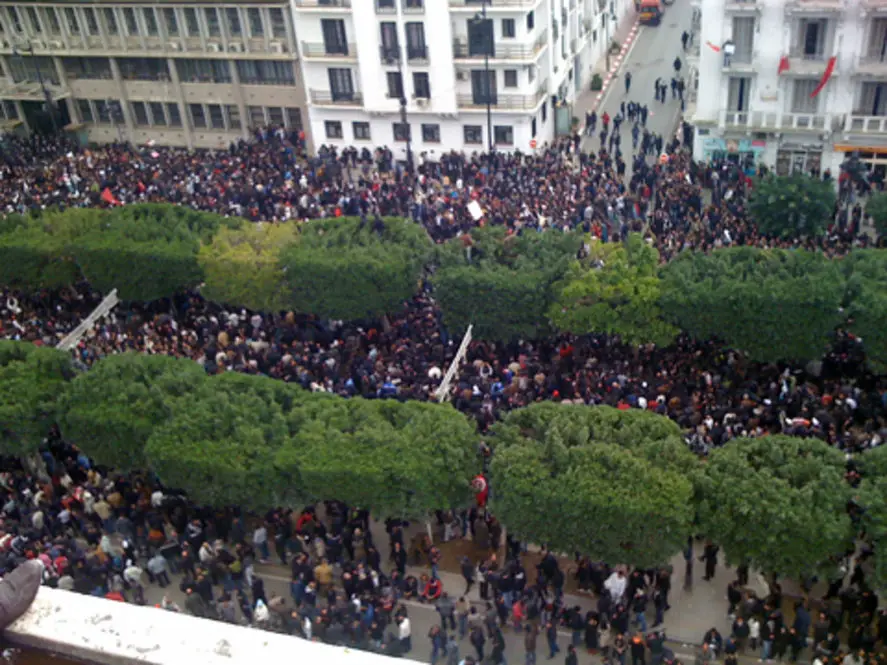
On 17 December 2010 the street vendor Mohamed Bouazizi, whose goods had been confiscated by municipal officials, set himself alight in Sidi Bouzid. His act struck a country marked by high unemployment among the young, inequality between the coast and the interior, corruption and little political freedom, and protests spread nationwide. On 14 January 2011 President Ben Ali fled, the first leader toppled in what became the Arab Spring.
Free elections followed in 2011 and a new constitution in January 2014. When political murders brought the country to the brink in 2013, a National Dialogue Quartet of unions, employers, lawyers and human‑rights defenders negotiated a way out, and won the Nobel Peace Prize in 2015.
Key dates
- 17 Dec 2010
- Mohamed Bouazizi self-immolates in Sidi Bouzid, igniting protests.
- 14 Jan 2011
- President Ben Ali flees; protests spread across the Arab world.
- 2014
- Tunisia adopts a new democratic constitution.
- 2015
- The National Dialogue Quartet wins the Nobel Peace Prize.
Key figures
- Bouazizi · spark, Dec 2010
- 14 Jan 2011 · Ben Ali flees
- Nobel 2015 · National Dialogue Quartet
From this era
Mohamed Bouazizi
On 17 December 2010 the street vendor Mohamed Bouazizi set himself alight in Sidi Bouzid, igniting nationwide protests.
“Rais Lebled”
El Général’s rap “Rais Lebled” (“President of the Country”, late 2010) became an anthem of the revolution; its words were sung by demonstrators and later in Cairo’s Tahrir Square.
Bendir Man, “Système”
Bendir Man (named after the bendir, a frame drum), whose concerts were blocked under Ben Ali, became a voice of the revolt; his satirical song “Système” (2009), recorded in secret, mocked the regime of the time.
Nobel Peace Prize
In 2015 Tunisia’s National Dialogue Quartet won the Nobel Peace Prize for steering the democratic transition.
What remains to see
- Avenue Habib Bourguiba, Tunis
- Sidi Bouzid