1159–1574
Almohads & the Hafsid Sultanate
Tunis becomes a major capital, and Ibn Khaldun is born.
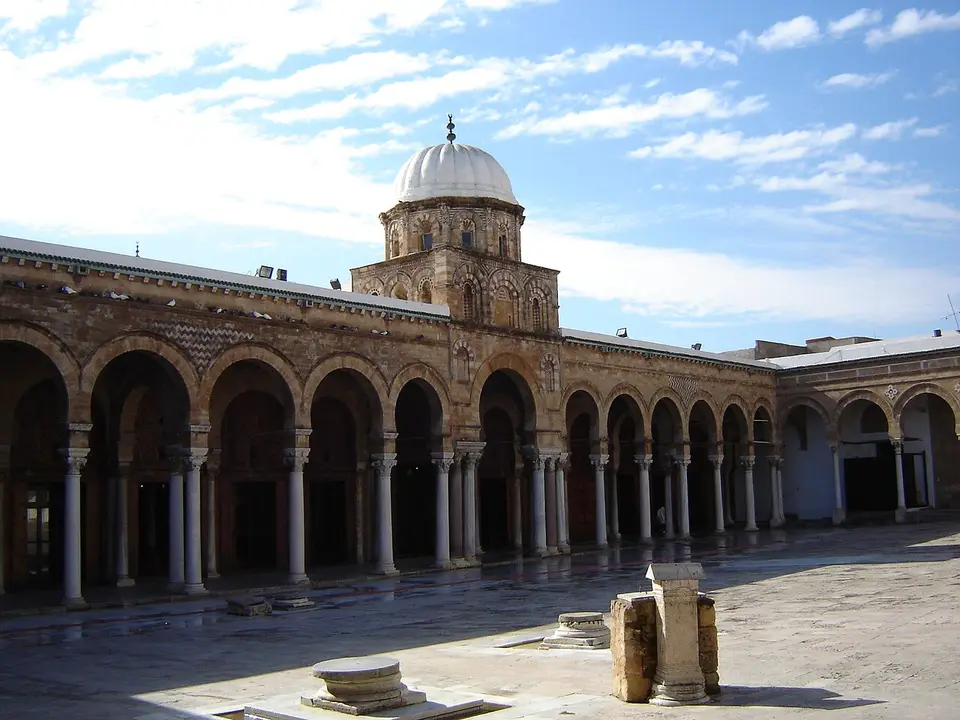
The Almohads, a Berber movement from the Atlas of present-day Morocco, united the Maghreb in 1159–60. Their governors in Tunis, the Hafsids, declared independence in 1229 and made Tunis a flourishing capital of trade, scholarship and Andalusi refinement, its medina and the Zitouna mosque at its heart.
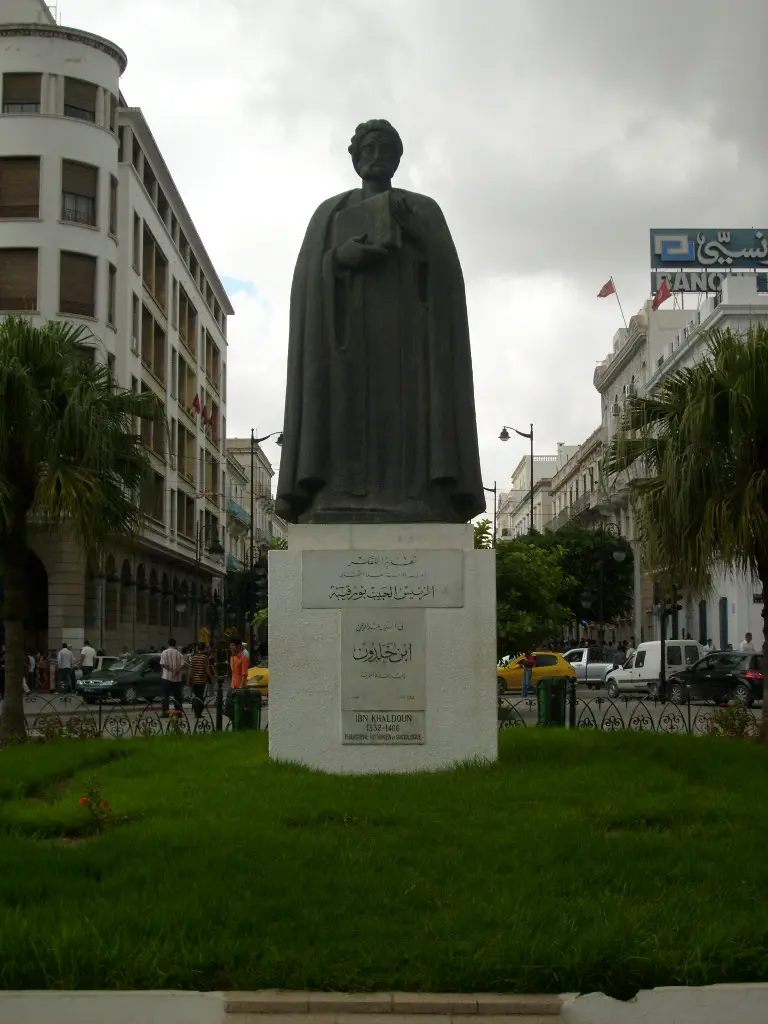
Tunis gave the world Ibn Khaldun (born here on 27 May 1332), whose Muqaddimah pioneered the study of history and society, explaining the rise and fall of dynasties by ʿasabiyya (social cohesion). The crusade of Louis IX of France ended at Carthage in 1270, where he died.
In the 16th century Tunis was caught between Spain and the Ottomans: Charles V took it in 1535, and the Ottomans conquered it for good in 1574.
Key dates
- 1159–60
- The Almohads conquer Ifriqiya and drive the Normans from Mahdia.
- 1229
- Abu Zakariya declares Hafsid independence, with Tunis as capital.
- 1270
- The Eighth Crusade of Louis IX of France collapses at Tunis (he dies of disease).
- 1332
- Ibn Khaldun is born in Tunis.
- 1535
- Emperor Charles V captures Tunis from the Ottoman forces of Barbarossa.
- 1574
- The Ottomans take Tunis, ending Hafsid rule.
Key figures
- Tunis · Hafsid capital
- Ibn Khaldun · b. Tunis 1332
- Muqaddimah · often called a founding work of sociology
“Civilization both in the East and the West was visited by a destructive plague which devastated nations and caused populations to vanish.”Ibn Khaldun, the Muqaddimah (14th c.)
From this era
Who were the Hafsids?
A Berber dynasty that emerged from the Almohad empire and declared independence in 1229, making Tunis a flourishing capital of trade and scholarship for three centuries.
ʿAsabiyya
In his Muqaddimah, Ibn Khaldun made ʿasabiyya, social cohesion, the key to the rise and fall of dynasties, an idea often seen as a forerunner of sociology.
Crusade of 1270
The Eighth Crusade of Louis IX of France collapsed before Tunis in 1270, when the king died of disease in his camp.