1881–1956
The French Protectorate
Colonial rule, and the birth of a national movement.
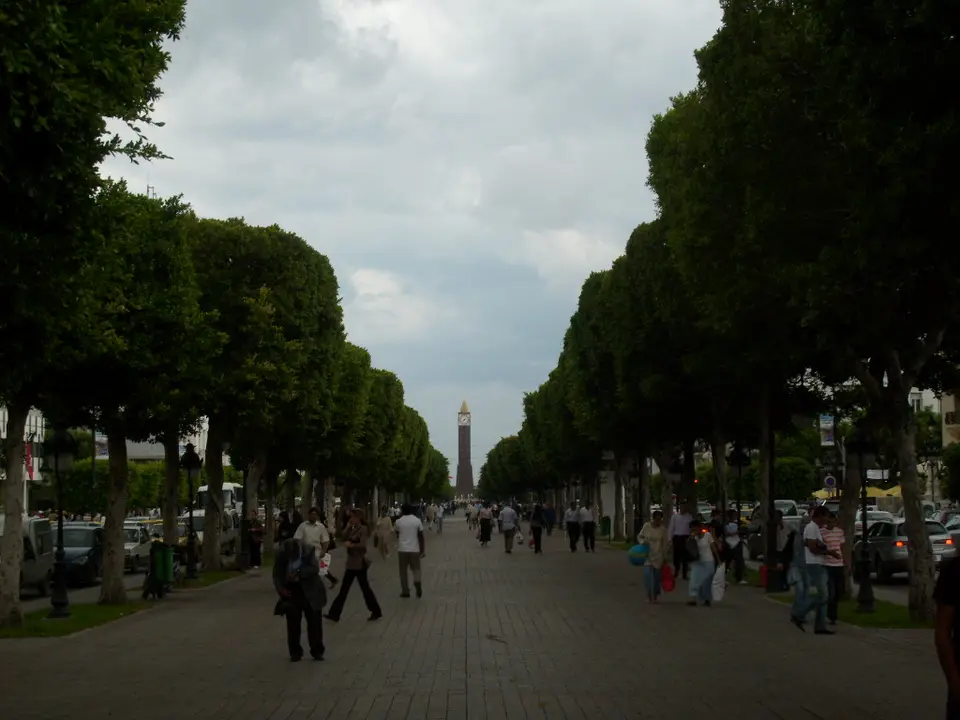
With the Treaty of Bardo (12 May 1881) and the La Marsa Convention (1883), France imposed a protectorate: a Resident‑General ran foreign affairs and finances while the bey reigned in name, and settlers took over much of the best farmland.
A national movement grew: the Destour party (1920), then the Neo‑Destour, founded at Ksar Hellal in 1934 by Habib Bourguiba and others. Protests on 9 April 1938 were put down in blood; the trade unionist Farhat Hached was assassinated in 1952.
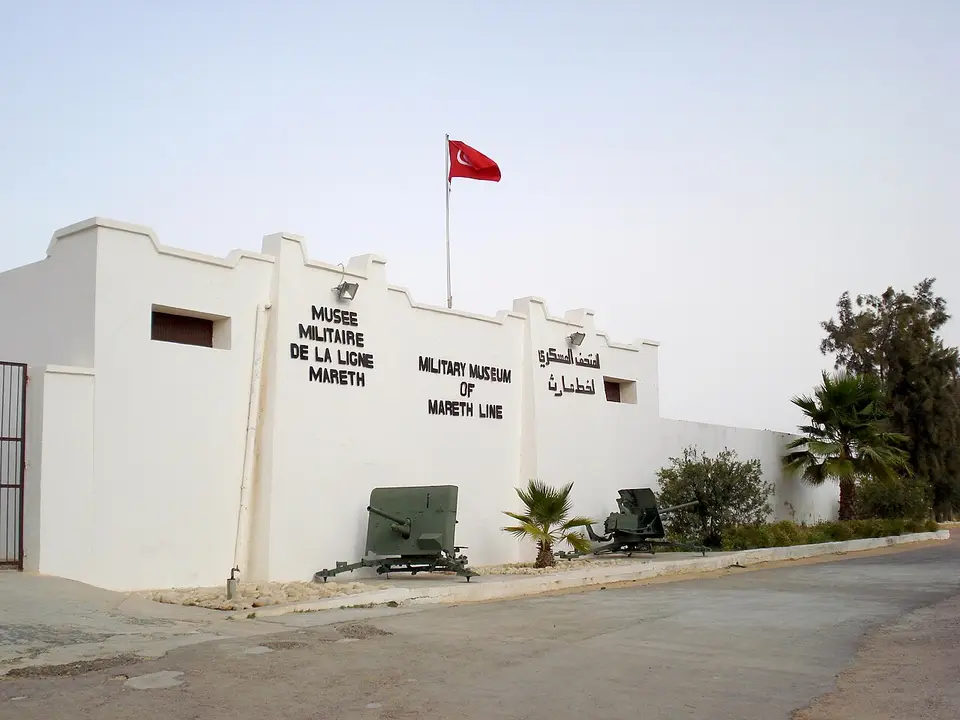
In the Second World War Tunisia became a battlefield. After the Allied landings in Algeria, German and Italian troops landed at Tunis in November 1942, and the Tunisian campaign was fought until 13 May 1943, through the Kasserine Pass (February) and the Mareth Line (March), ending with more than 260,000 Axis soldiers taken prisoner. Under the occupation the Jews of Tunisia were made to wear the yellow badge and fined, and more than 5,000 were sent to forced labour camps.
After armed resistance and negotiation, Tunisia won internal autonomy in 1955 and independence on 20 March 1956.
Key dates
- 12 May 1881
- Treaty of Bardo imposes the French protectorate.
- 1920
- The Destour (Constitution) party is founded.
- 1934
- Habib Bourguiba and fellow nationalists found the Neo-Destour.
- 9 Apr 1938
- Nationalist demonstrations in Tunis are put down in blood.
- Nov 1942 – May 1943
- The Tunisian campaign: Axis troops hold Tunisia until they surrender on 13 May 1943.
- 5 Dec 1952
- The trade unionist Farhat Hached is assassinated.
- 1955
- Tunisia gains internal autonomy.
Key figures
- Treaty of Bardo · 12 May 1881
- Neo‑Destour · nationalist party
- Bourguiba · independence leader
From this era
The protectorate
France, the colonial power, imposed a protectorate in 1881: the bey reigned in name while France controlled finances, foreign affairs and the army.
Treaty of Bardo
The Treaty of Bardo (12 May 1881) formally established the French protectorate over Tunisia.
Bourguiba & the Neo-Destour
Habib Bourguiba’s Neo-Destour party (1934) organised the mass movement that drove the path to independence.
Road to independence
Armed resistance and negotiation through 1952 to 1955 won internal autonomy, then full independence in 1956.
What remains to see
- Tunis’s ville nouvelle, around Avenue Bourguiba
- Military Museum of the Mareth Line